You’ve shown readers what you found.
Now you have to explain why it matters.
Not just repeat the results.
Not just add a few citations.
And definitely not promise that one study will solve everything.
Chapter 5 asks you to bring the pieces together: your findings, the literature, your framework, and the problem that started this entire journey.
That can feel like a lot, especially when you’re already tired of looking at your dissertation.
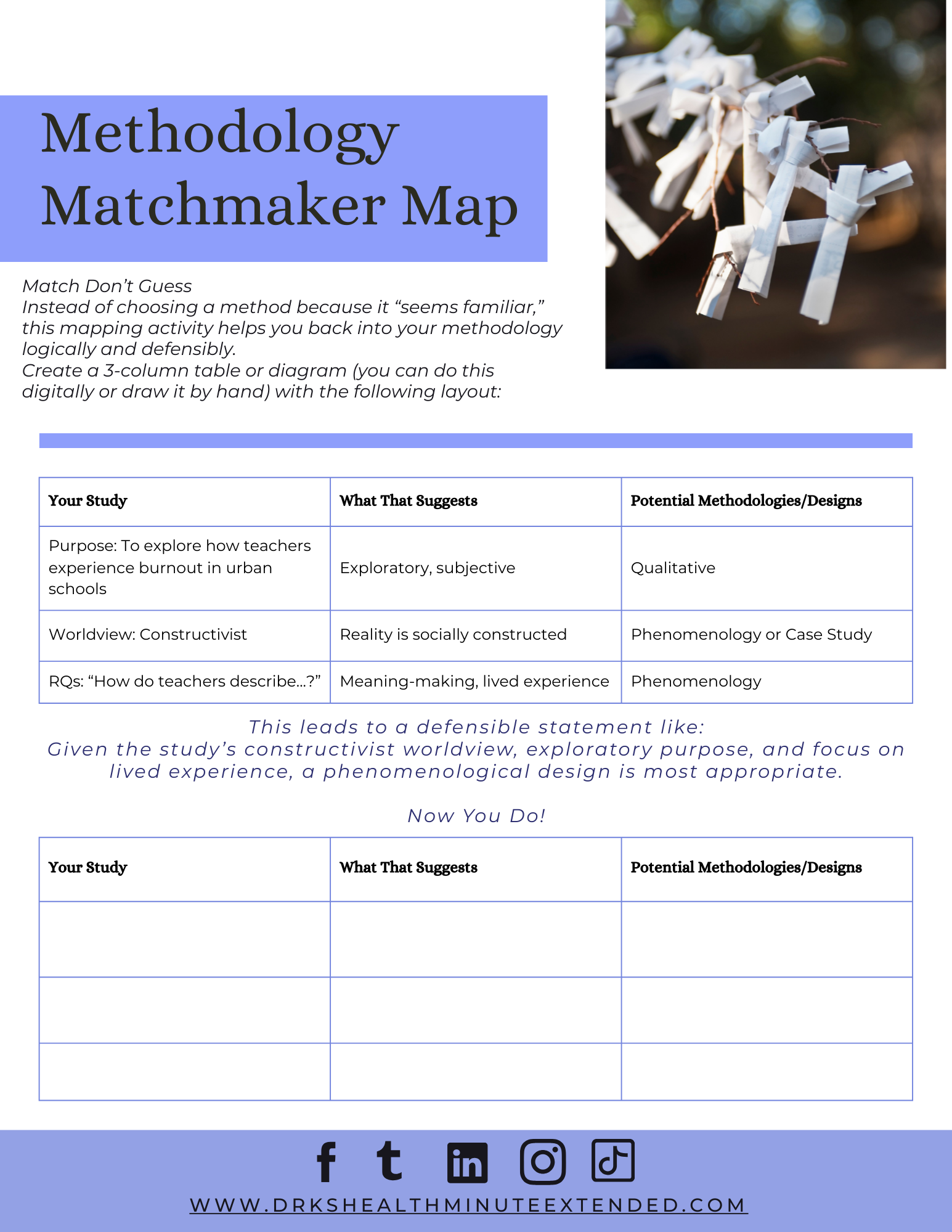
The Meaning: Turning Data into Impact in Chapter 5 is a digital workbook designed to move you from “These are my findings” to “This is what my study contributes.” Through guided alignment maps, worked examples, and paragraph builders, you’ll develop interpretations, connect your findings to scholarship, and explain their significance without stretching beyond the evidence.
Created by Dr. Rahmatu “Dr. K.” Kassimu, this workbook walks you through the reasoning and writing that make Chapter 5 coherent, meaningful, and defensible.
The Meaning is built around five core moves:
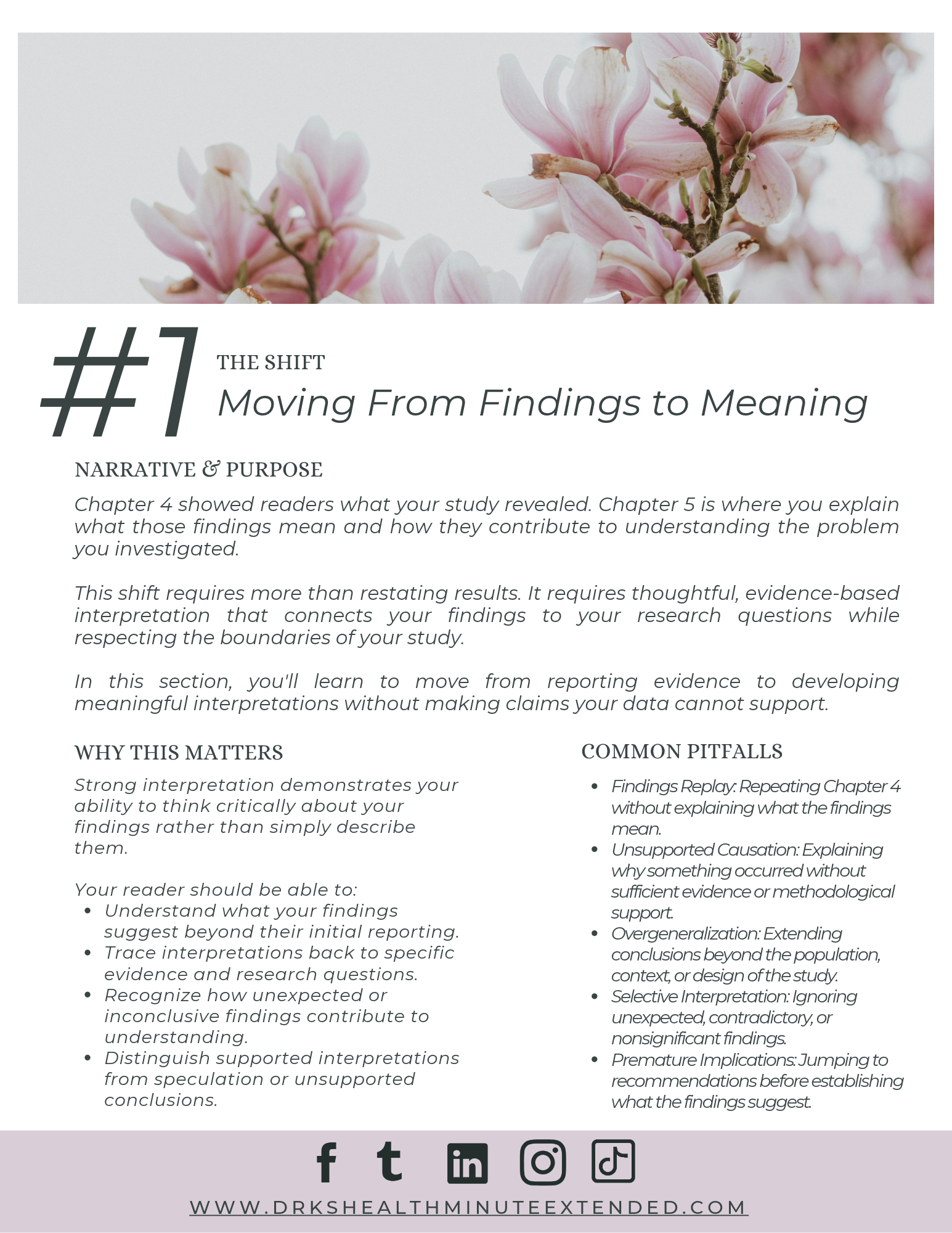
Reporting a finding and interpreting it are different scholarly moves. Chapter 5 asks you to explain what your findings reasonably suggest and how the evidence supports that explanation.
This section helps you make that shift with intention.
You’ll work through:
The Meaning Move: Findings-to-Meaning Alignment Map to connect a major finding to a supported interpretation.
Prompts to examine supporting evidence, alternative explanations, and the boundaries of your claims.
The Interpretation Line, a guided approach to building an interpretation paragraph.
Methodological considerations and examples to help you think through what quantitative, qualitative, and mixed methods evidence can support.
An interpretation check to identify statements that go beyond the evidence.
You’ll begin developing a discussion that explains your findings without turning possibilities into conclusions your study cannot defend.
Your literature review introduced the scholarly conversation. Chapter 5 is where you return to that conversation with findings of your own.
This section helps you explain those connections rather than simply attach citations to your results.
You’ll work through:
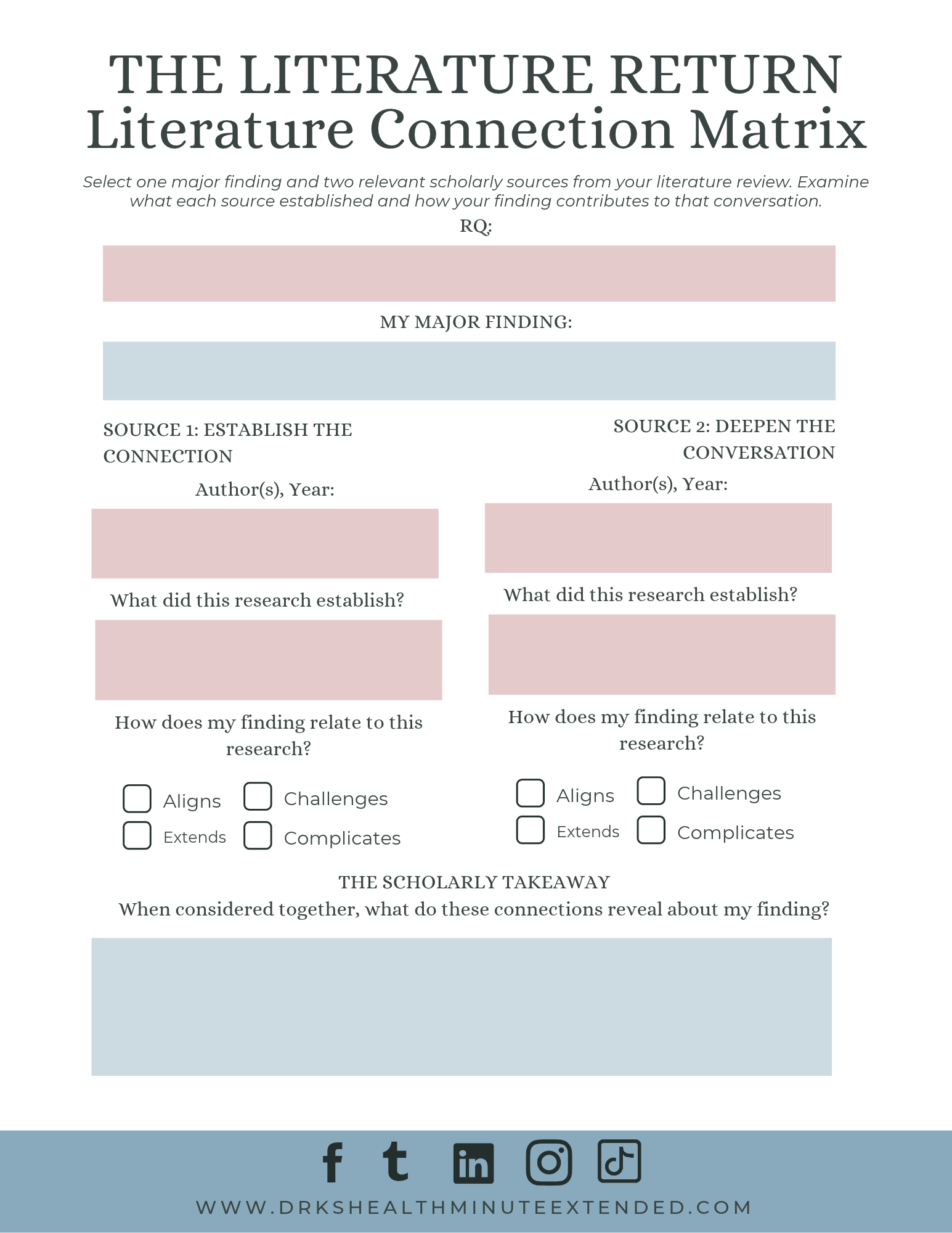
The Literature Return: Literature Connection Matrix to examine how your findings align with, extend, challenge, or complicate previous research.
A Scholarly Discussion Builder to turn those connections into a cohesive discussion.
The Framework Connection to explore how your theoretical or conceptual framework helps explain your findings.
A Framework Alignment Map and guided writing prompts to develop meaningful connections between evidence and concepts.
The Connection Check to catch superficial comparisons, forced framework connections, and discussion that repeats findings without engaging the scholarship.
You’ll practice showing readers how your study participates in the conversation and what it adds.
“This study has implications for practice” is a starting point.
You still need to explain which findings matter, who they matter to, and what the evidence can reasonably inform.
This section helps you build that chain of reasoning.
You’ll work through:
The Impact Bridge to distinguish findings, interpretations, implications, and recommendations.
A Findings-to-Implications Alignment Map to trace each proposed implication back to your evidence.
A guided implications paragraph builder to explain relevance without making unsupported promises.
The Audience Map to identify who may benefit from the findings and why.
Prompts and examples for deciding when a finding supports a recommendation.
The Impact Check to catch unsupported leaps, recommendations that arrive too early, missing audiences, and claims that reach beyond the study.
You’ll develop implications that are specific, relevant, and connected to what your research actually supports.
Every study has boundaries. Explaining yours clearly is part of demonstrating scholarly judgment.
This section helps you discuss limitations without dismissing the value of your work.
You’ll work through:
The Boundary Line to distinguish limitations, intentional delimitations, and interpretive boundaries.
A Limitations Alignment Map to identify meaningful constraints and explain how they affect the interpretation of your findings.
A Limitations Paragraph Builder to turn those connections into a clear discussion.
A Future Research Alignment Map to develop research directions that emerge from your findings, limitations, or unanswered questions.
The Boundaries Check to review whether your limitations and future directions are specific, justified, and grounded in the study.
You’ll move beyond generic statements like “more research is needed” and explain what future work could examine and why.
Your contribution does not have to change everything.
It does need to be clear.
This final section helps you articulate what your study adds to existing knowledge and bring Chapter 5 to a purposeful close.
You’ll work through:
The Contribution Claim to distinguish what your study found, what it may inform, and what it contributes.
A Scholarly Contribution Alignment Map connecting the research problem, knowledge gap, findings, and scholarly significance.
A Scholarly Contribution Paragraph Builder to communicate what your research adds while respecting its boundaries.
The Final Word: Chapter 5 Conclusion Builder to bring together your purpose, central insights, contribution, and final takeaway.
The Contribution Check to catch inflated significance, unsupported originality, repetition, and weak closure.
The Final Alignment Audit: Is My Chapter 5 Ready?, an eight-point review of the chapter’s evidence, interpretation, scholarly connections, implications, boundaries, contribution, and coherence.
You’ll work toward a conclusion that gives readers a clear understanding of why your study matters.
Doctoral and thesis writers who have reported their findings and are ready to develop Chapter 5.
Students who keep hearing “go deeper” or “explain the significance” but need help understanding what that looks like on the page.
Researchers struggling to reconnect their findings to the literature or theoretical framework.
Writers who need to distinguish implications from recommendations and findings from contributions.
Scholars who want to discuss limitations honestly while communicating the value of their work.
Anyone using The Reveal who is ready to move from presenting evidence to explaining its meaning.
By working through The Meaning, you’ll develop:
Evidence-supported interpretations of your major findings.
Draft discussion paragraphs that connect your study to relevant literature and framework concepts.
Aligned implications and appropriately justified recommendations.
A clearer understanding of who your findings may matter to and why.
A specific discussion of limitations and interpretive boundaries.
Future research directions connected to your study.
A scholarly contribution statement that explains what your research adds.
A cohesive Chapter 5 conclusion and a final alignment check to guide revision.